Ask three upholstery cleaners how they work and you will get three different answers. The methods are genuinely different, they suit different fabrics, and using the wrong one on the wrong material causes damage that cannot be reversed.
Wet shampoo with hot water extraction
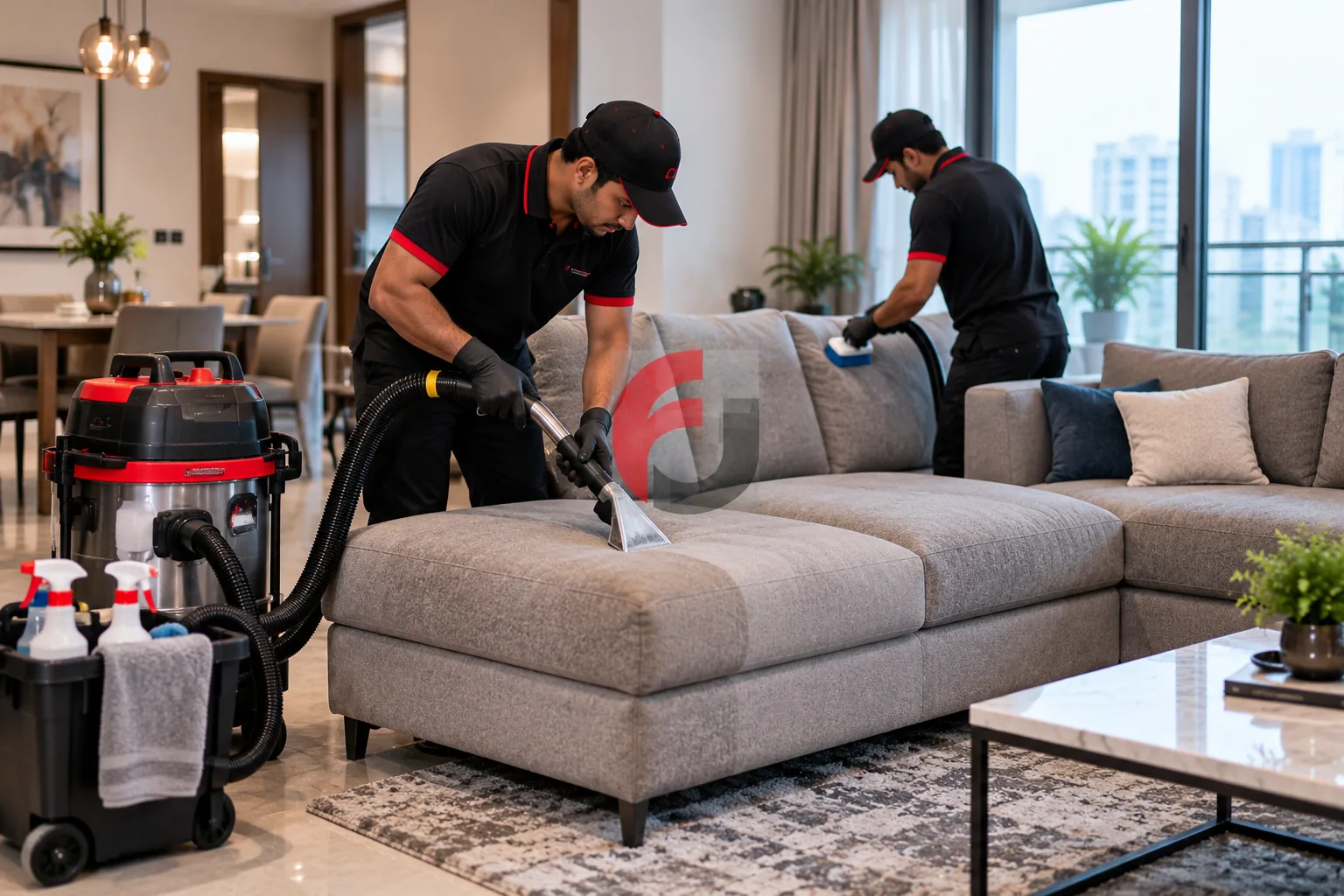
A shampoo solution is worked into the fabric, then a machine injects hot water and immediately vacuums it back out, carrying the dissolved soil with it. This is the most thorough method available and the default for ordinary fabric upholstery.
- Best for: cotton, polyester, microfibre and most synthetic blends
- Removes: embedded dirt, body oils, food and drink stains, odour
- Drying time: four to six hours with blowers
- Avoid on: silk, velvet, linen, jute and anything labelled dry-clean-only
Dry foam
A dense foam is applied, agitated gently, left to lift soil to the surface, then vacuumed away. Very little moisture reaches the fabric, which is exactly the point.
- Best for: delicate fabrics, silk, velvet, and anything prone to watermarking or shrinking
- Removes: surface soil and light staining
- Drying time: one to two hours
- Limitation: will not reach deeply embedded soil the way extraction does
Steam
Dry steam sanitises through heat rather than chemistry. It is excellent for killing dust mites and bacteria, and much less effective at removing actual dirt, so it is usually combined with another method rather than used alone.
- Best for: sanitising, dust mite control, and fabrics that tolerate heat
- Removes: bacteria, mites and odour, but not embedded soil
- Drying time: one to two hours
- Avoid on: leather, and any glued or heat-sensitive construction
Leather is its own category
None of the above applies to leather. Leather is cleaned with a pH-balanced leather cleaner applied by hand and followed by a conditioner to restore the oils. Saturating leather with water or steam causes it to stiffen and crack as it dries, and that damage is permanent.
Always check the care tag
Most sofas carry a code underneath: W means water-based cleaning is safe, S means solvent only, WS means either, and X means vacuum only. A cleaner who does not look for that tag before starting is guessing with your furniture.
What good practice looks like
- Identify the fabric and check the care code
- Test for colour-fastness on a hidden patch and wait for it to dry
- Vacuum thoroughly first - cleaning over dry soil just turns it to mud
- Pre-treat stains individually rather than relying on the general wash
- Apply the chosen method, extracting rather than leaving residue behind
- Dry with blowers, because slow drying is what causes watermarks and musty smells
That colour-fastness test is the step most often skipped, and it is the one that prevents the worst outcome. A technician who dives straight in with a machine and no test is taking a risk with a piece of furniture that costs considerably more than the cleaning does.
Written by the Facilities4u team. We are a deep cleaning company based in Mahadevapura, Bengaluru. These guides come from what our supervisors see on jobs across the city every day.